Charting Payment Pathways from Roulette Wins to Layered Blackjack Bonuses Across Digital Platforms
Written by Blake Bennett · Oct 1, 2026

Charting Payment Pathways from Roulette Wins to Layered Blackjack Bonuses Across Digital Platforms
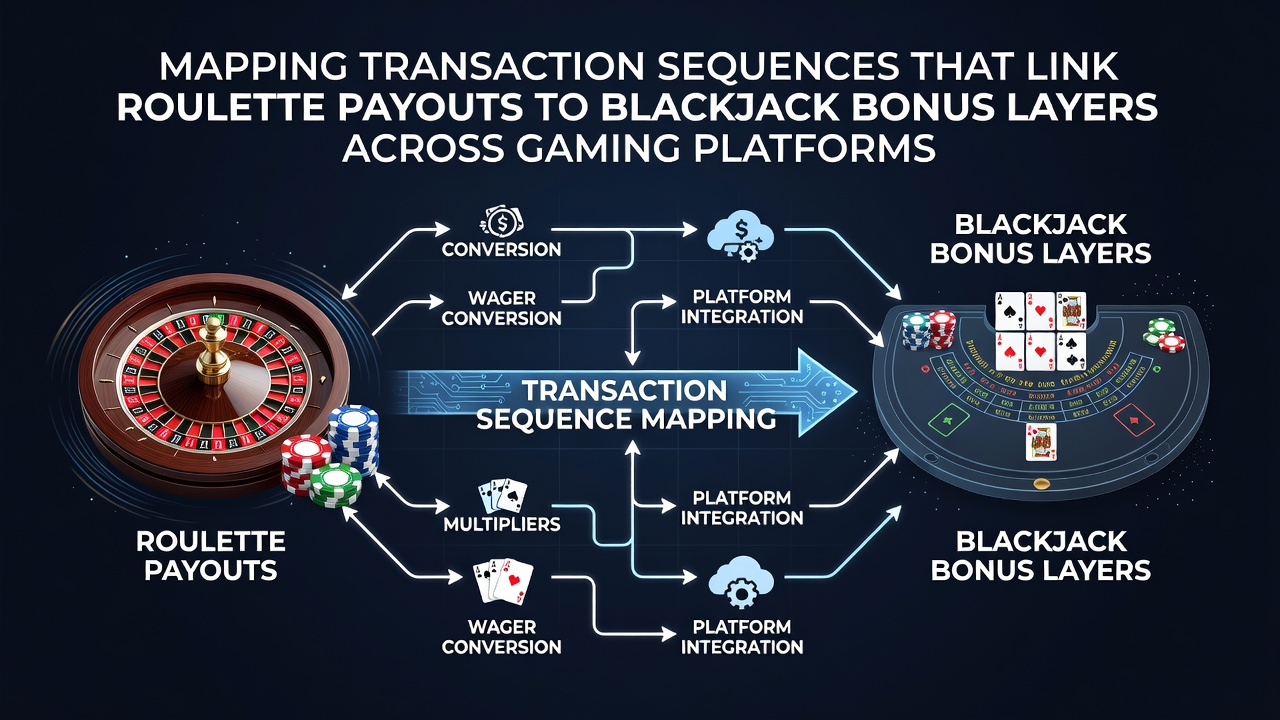
Transaction sequences in online gaming environments connect roulette payouts directly to blackjack bonus layers through wallet integrations and wagering trackers that platforms maintain across multiple titles. These sequences begin when a roulette win credits a player account balance and then move forward as that balance funds blackjack wagers that satisfy bonus conditions or unlock additional reward tiers.
Core Mechanics of Linked Transaction Flows
Platforms record each payout as a distinct ledger entry that carries metadata about its origin game, so roulette earnings remain traceable when they transfer into blackjack sessions. Bonus layers activate once cumulative wagers reach thresholds that the system calculates from combined activity rather than isolated game results. Data from platform audits shows that operators apply these rules uniformly across mobile and desktop interfaces to maintain consistent tracking regardless of device.
Payment gateways handle the movement between game modules by updating real-time balances while preserving the source attribution for compliance checks. Researchers at the University of Nevada, Las Vegas documented similar patterns in a 2025 analysis of multi-game bonus structures where roulette credits fed directly into table game requirements without requiring separate deposits.
Platform Variations in Sequence Mapping
Different operators implement distinct tagging systems that label incoming funds by game type and apply them to bonus progress bars accordingly. Some platforms allow roulette payouts to count toward blackjack-specific multipliers while others route those same funds through a shared pool that serves multiple table games. Observers note that these differences appear most clearly in how wagering contributions calculate during live dealer sessions versus RNG versions.
Cross-platform play introduces additional layers because mobile apps sync balances with desktop accounts through centralized servers that log every transfer timestamp. In October 2026 several major operators updated their backend systems to improve visibility into these transfers after regulatory reviews highlighted gaps in bonus attribution records.
Bonus Layer Activation Through Sequential Credits
Blackjack bonus layers typically stack in tiers where the first layer releases upon meeting a base wager total and subsequent layers unlock at higher multiples. Roulette payouts contribute to these totals once they enter the active balance, yet the rate at which they count depends on the platform's contribution percentages for each game category. Figures from the American Gaming Association reveal that table game contributions often range between 10 and 20 percent of total wagers toward bonus clearance across leading US markets.
Operators maintain audit trails that map each credit back to its originating spin or hand so that bonus abuse detection systems can flag unusual patterns. These trails become essential when players shift funds rapidly between roulette and blackjack to test different contribution rates or exploit timing windows in bonus expiration clocks.
Regulatory and Technical Oversight Considerations
Gaming control bodies in multiple jurisdictions require operators to preserve detailed transaction logs for a minimum period that varies by region. The New Jersey Division of Gaming Enforcement mandates retention of all bonus-related sequences for at least five years, which includes the specific pathways connecting roulette outcomes to blackjack reward tiers. Similar requirements appear in Canadian provincial frameworks where lottery and gaming corporations review cross-game fund movements during routine compliance examinations.
Technical standards published by independent testing labs specify how platforms must timestamp and categorize each movement so that third-party auditors can reconstruct sequences without ambiguity. These standards emphasize interoperability between game servers and payment processors to prevent data loss during high-volume periods.
Conclusion
Mapping these transaction sequences provides operators and regulators with clearer visibility into how roulette payouts interact with blackjack bonus structures across diverse platforms. The documented practices rely on consistent ledger tagging, real-time balance updates, and contribution rate calculations that differ by operator yet follow shared technical guidelines. Continued refinement of these systems supports accurate tracking while accommodating evolving game portfolios and device ecosystems.